While users are able to search assessments through the Manage tab after selecting a specific study, ASMT also allows users to search assessments by All Studies.

Upon logging into ASMT, the study drop down tab will automatically be set to All Studies. You can click the study drop down to select a particular study and access the other ASMT tools, or you can click Search Assessments in the upper right corner to search for assessments by all of your studies.
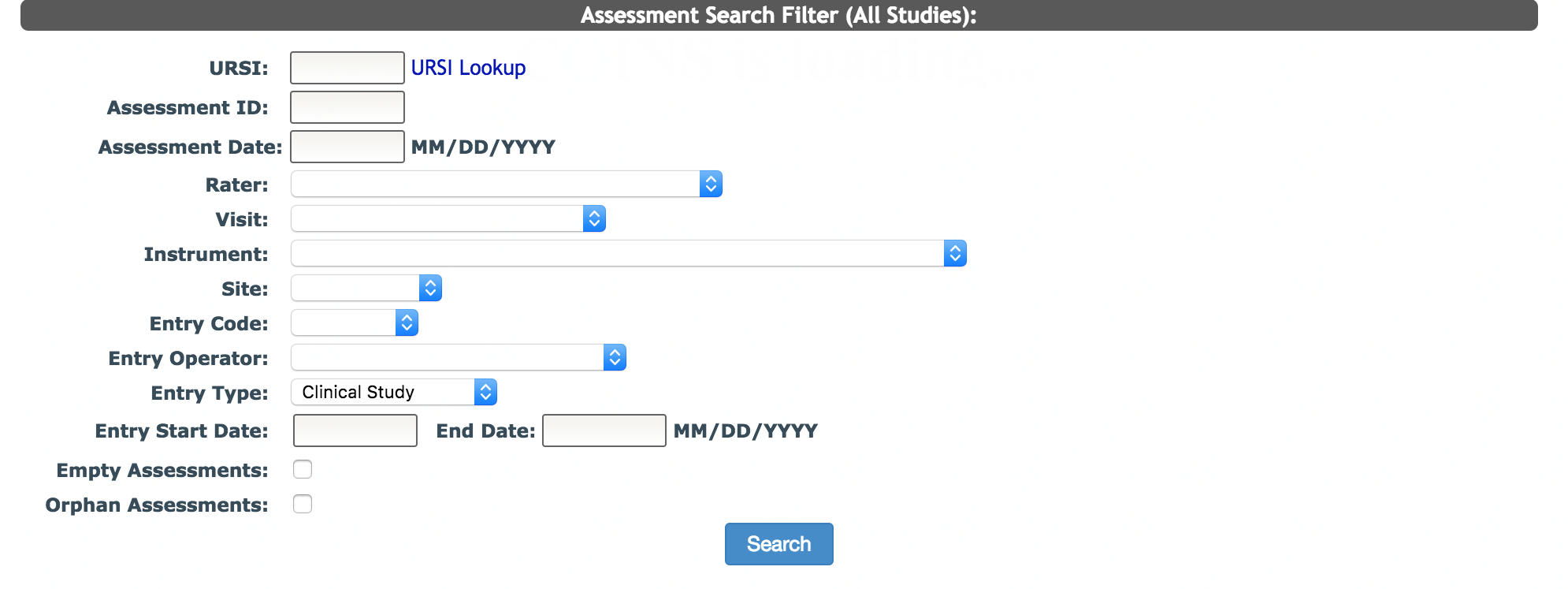
You can use this tool to view all assessment records for your studies. Use the filter criteria to find the assessment(s) of interest.
If you want to search for orphans, check the Orphan Assessments box. Orphan records are those that do not have a C or F record associated with them. To learn more about 1st, 2nd, and complete records, click here.
You can also search for assessments using a subject tag by clicking URSI Lookup next to the URSI box.

Select the tag type from the drop down list and then enter the subject tag. Choose to search global, site-wide or study-specific.
Note: URSIs that are no longer linked to PHI will not be searchable using subject tags.

Your look up result will be shown. Click select to use the URSI for searching.
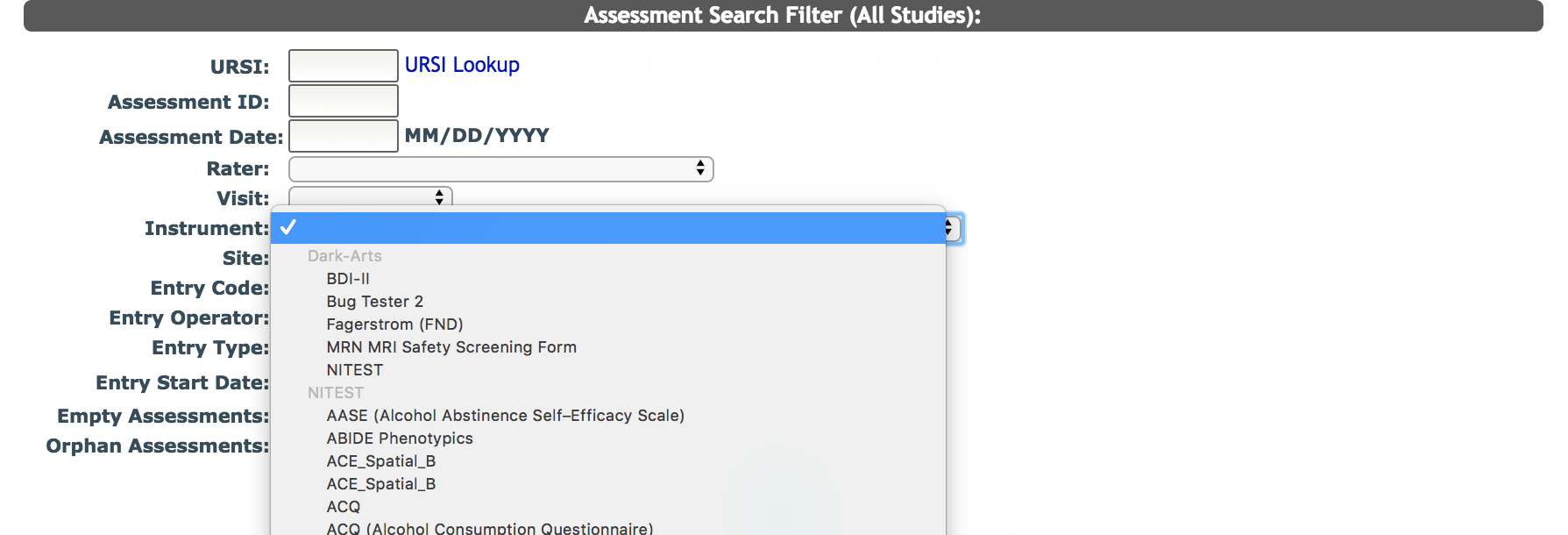
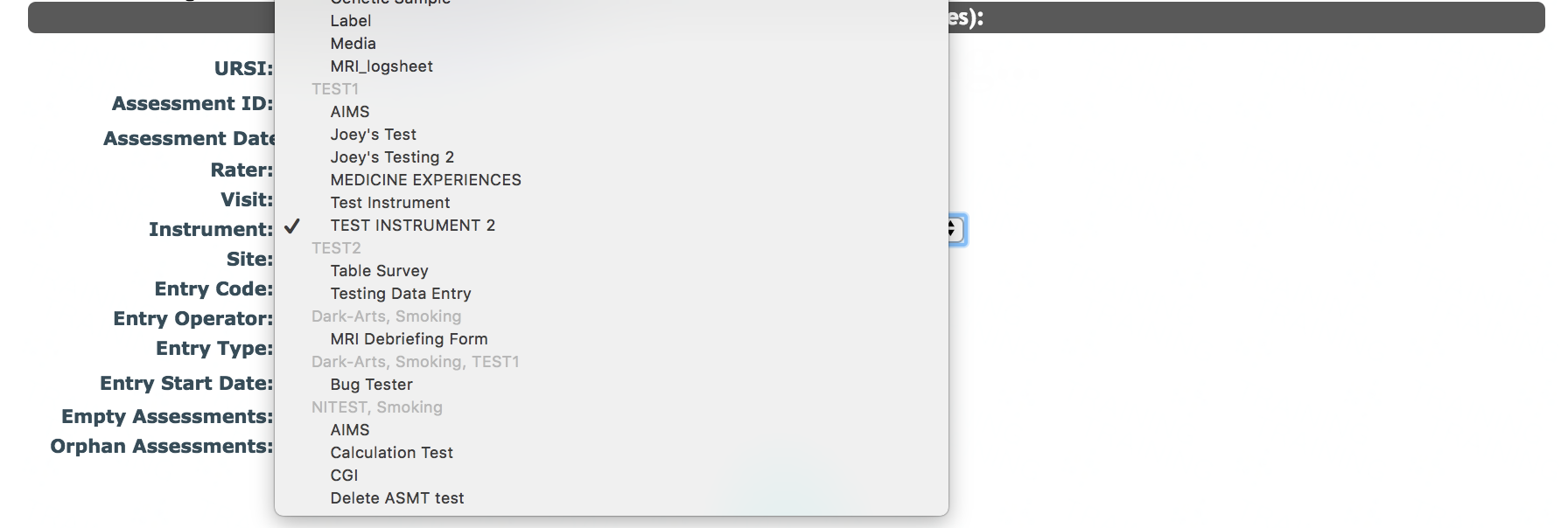
If you would like to search by instrument, the instrument drop down will be organized by studies you have access to (in alphabetical order) with each study's instruments below its name. If any of your studies share instruments, you will see those at the bottom with the sharing studies listed above.
After searching for your assessments, the results will be displayed. On the results list you will see basic information about the assessments. The Assessment Search table has many built-in features to help users customize and retrieve table information. The table will have all of the information that the study-specific search table has, with the addition of a Study column. Because Data Exchange and mapping options are both study specific, you will not see those columns or be able to edit those options from this table.
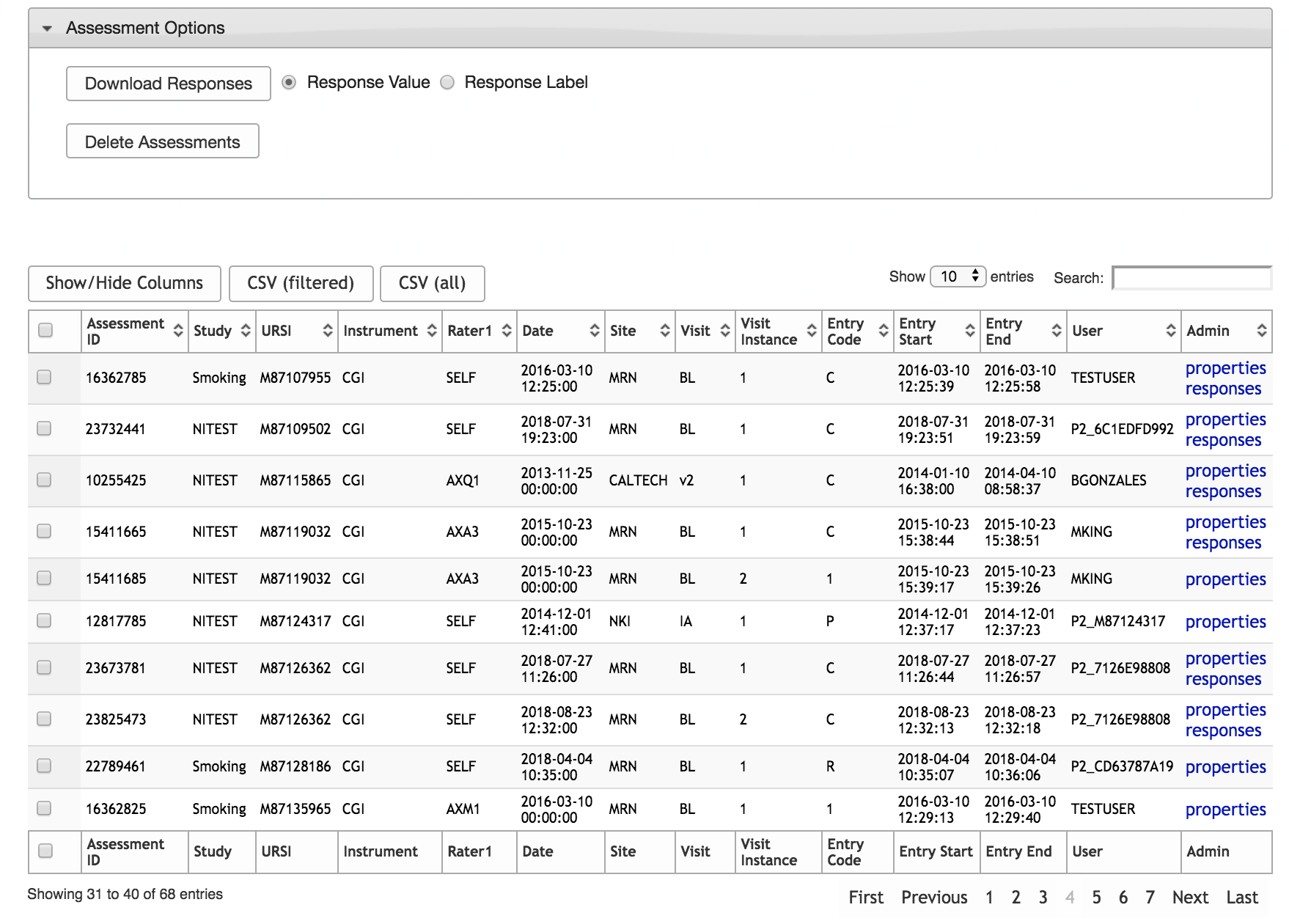
Under the Code column you can see the type of record the assessment is. Assessment entry codes reflect the entry type of an assessment and where it is in the entry process.
- 1 - First Entry (dual entry)
- 2 - Second Entry (dual entry)
- C - Complete assessment (all assessment types)
- F - Failed Dual Entry (dual entry in Conflict Resolution)
- R - Review Queue (in the Self Assessment Review Submissions queue)
- P - Pending assessment (Self Assessment entry has not been completed)
- O - Ongoing assessment (data entry only, not Self Assessment)
- S - Single (a direct entry before it is completed)
Hover over the entry code to see the definition.
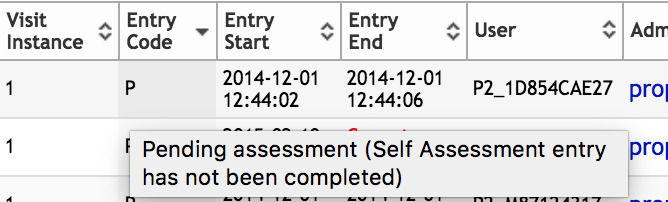
Unlike with the study specific assessment search, you will not be able to send pending assessments to the review queue or complete incomplete assessments from this table.
If you chose to upload files to your assessments you can download files from C records in your results by clicking Download documents. This button is only visible if instruments in your search contain a file upload question.
From the search table, click properties to view or edit the assessment's cover sheet properties. If a record is complete or if the search is an orphan search, you can click responses to view or update the responses for that assessment. Click Files to download uploaded files the selected assessment.
Assessment Options
Download Responses
You can download orphan and complete record sets by clicking on Assessment Options, selecting the check boxes next to the assessments you want to download responses for, and then click Download Responses. This will produce a csv with the assessment data that you indicated for download. You can choose to download the response value or the response label.
Note: If you have "Include age variable in exports" set to Yes for the instrument you are downloading responses for, a column labeled Age (participants' age when they completed the assessment) will be included in the csv.
Delete Assessments
To delete assessments, click the checkbox for the assessments that you wish to delete in the assessment table. Currently only R, P, O, S and C records can be deleted. Use this tool only for assessments that you truly want to delete as you will not be able to retrieve them. Once you have selected the appropriate assessments click Delete Assessments. A summary of all assessments to be deleted will be shown. Click Continue to delete the assessments in the list or Cancel to go back without deleting.

Comments